Symphony of Waterfalls: The World's Top Ten Astounding Waterfall Spectacles
The roar of falling water echoes through ancient canyons, a primal symphony composed by nature itself. Waterfalls have captivated human imagination since time immemorial, their thunderous music and misty veils inspiring legends, art, and pilgrimages across continents. These liquid cathedrals remind us of Earth's raw power and delicate beauty in equal measure.
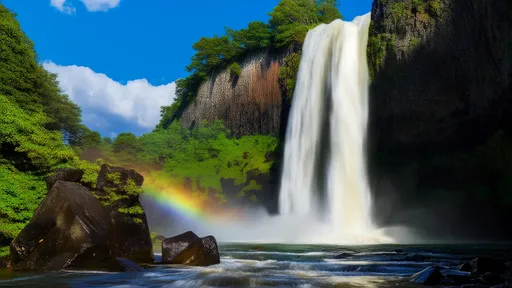
Victoria Falls, known locally as "Mosi-oa-Tunya" (The Smoke That Thunders), transforms the Zambezi River into a curtain of falling diamonds. During flood season, its spray rises 400 meters – visible from 50 kilometers away – creating permanent rainbows that dance across the gorge. The basalt cliffs channel the water's fury into a narrow chasm called the Boiling Pot, where whirlpools spin like liquid galaxies.
South America's Iguazu Falls performs a more complex movement, with 275 individual cascades spanning nearly three kilometers. The Devil's Throat section drops 82 meters in a horseshoe-shaped plunge that swallows entire rainforests in its mist. Butterflies materialize from the vapor, their iridescent wings refracting sunlight into fleeting stained-glass windows above the roaring abyss.
North America's Niagara Falls plays a different melody – less about height than sheer hydraulic force. Six million cubic feet of water per minute crash over the crescent-shaped brink, generating enough energy to power nearby cities. Winter transforms the spectacle into a frozen sonata, with ice bridges forming intricate crystal structures along the banks.
The Angel Falls in Venezuela descends like a silver thread from heaven, its 979-meter freefall the longest uninterrupted plunge on Earth. Water disperses into fine mist long before reaching the base, creating the illusion that the cascade evaporates mid-air. The surrounding tabletop mountain, Auyán-tepui, resembles a lost world where dinosaurs might still roam.
Norway's Kjosfossen demonstrates how waterfalls can harmonize with human artistry. During summer, a crimson-clad dancer emerges from the railway station to perform a traditional folk dance against the curtain of white water – a surreal juxtaposition of culture and nature timed perfectly with passing tourist trains.
Africa's Tugela Falls cascades down the Drakensberg Amphitheatre in five distinct tiers, resembling a giant's staircase. During rare snowfall, the water transforms into delicate ice sculptures that shatter with musical chimes when sunlight strikes them. The Zulu people consider this place where the sky meets the earth.
In Laos, the Khon Phapheng Falls of the Mekong River creates a different kind of music – a basso profundo rumble as the entire might of Southeast Asia's mother river squeezes through narrow channels. The caramel-colored water carries silt from Tibetan plateaus, giving the falls a molten bronze appearance at sunset.
Yosemite's Bridalveil Fall exemplifies water's ballet. Winds often catch its 189-meter descent, causing the flow to billow sideways like a spectral bride's veil. The Ahwahneechee people believed inhaling the mist ensured marriage, while early photographers struggled to capture its ever-shifting form on glass plates.
Iceland's Dettifoss, Europe's most powerful waterfall, performs a heavy metal concert of nature. Glacial meltwater the color of liquid slate hurls itself over the 45-meter drop with such force that the surrounding bedrock trembles. During midnight sun, the spray becomes an otherworldly aurora of suspended water droplets.
Finally, there's Sutherland Falls in New Zealand's Fiordland, where three vertical leaps create a cascading harmony. The remoteness adds another layer to its mystique – reaching it requires a four-day trek through rainforests where birdsong hasn't changed since the Pleistocene epoch. The falls' voice here carries no human echoes, only the ancient music of Gondwana.
These waterfalls form Earth's grandest orchestra, each movement composed by unique geology and hydrology. Their symphonies remind us that beauty and power need not be opposing forces, but can exist in perfect, thunderous harmony. As climate change alters precipitation patterns, these natural wonders face uncertain futures – making their eternal roar suddenly, tragically ephemeral.