Aurora Borealis: Pursuing Natural Wonders within the Arctic Circle
The Arctic Circle has long held a mystique that captivates explorers, scientists, and dreamers alike. Its vast, frozen landscapes and ethereal natural phenomena seem almost otherworldly, drawing those who seek to witness the raw beauty of Earth’s northernmost reaches. The Polar Light, as it’s often poetically called, is more than just a destination—it’s a journey into the heart of nature’s most awe-inspiring wonders.
Stretching across eight countries, the Arctic is a realm of extremes. Temperatures plummet far below freezing, and the sun either never sets or never rises for months on end. Yet, within this harsh environment thrives an ecosystem of remarkable resilience. Polar bears roam the ice, their survival intricately tied to the shifting patterns of sea ice. Arctic foxes, with their seasonal camouflage, dart across the tundra, while whales breach the frigid waters in search of food. The delicate balance of life here is a testament to nature’s adaptability.
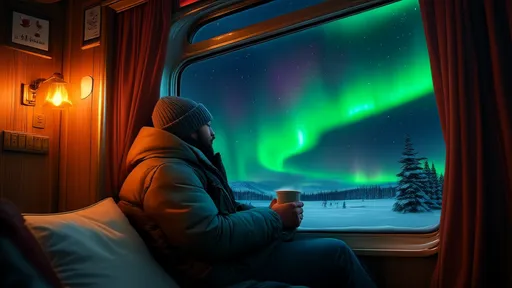
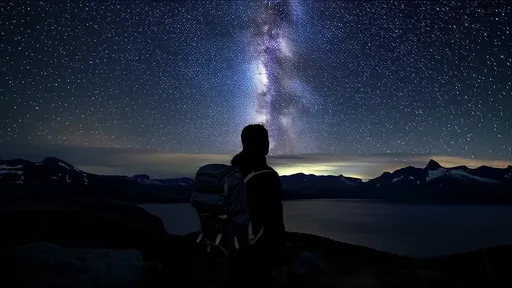
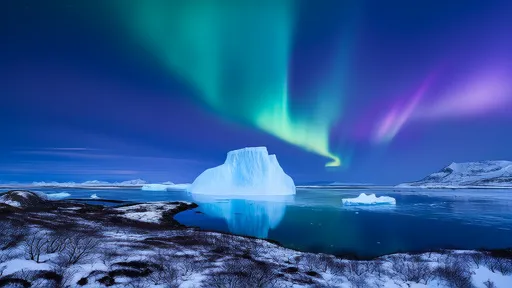
One of the most breathtaking spectacles in the Arctic is the Northern Lights, or Aurora Borealis. These shimmering curtains of green, pink, and violet light dance across the night sky, a result of charged particles colliding with Earth’s atmosphere. For centuries, indigenous cultures have woven myths around these lights, seeing them as spirits or omens. Today, scientists study them to understand more about our planet’s magnetic fields, but their magic remains undiminished. To stand beneath the auroras is to feel a connection to something far greater than oneself.
Beyond the lights, the Arctic’s landscapes are equally mesmerizing. Glaciers, some thousands of years old, carve their way through mountains, their blue ice glowing under the midnight sun. Fjords, with their steep cliffs and deep waters, create dramatic vistas that seem untouched by time. The sheer scale of these formations is humbling, a reminder of the slow, powerful forces that shape our world.
Yet, the Arctic is also a place of profound change. Climate change is altering this region faster than almost anywhere else on Earth. Rising temperatures are causing permafrost to thaw, glaciers to retreat, and sea ice to disappear at an alarming rate. The consequences are far-reaching, affecting not only the wildlife that calls the Arctic home but also global weather patterns and sea levels. The very phenomena that make the Arctic so extraordinary—its ice, its ecosystems, its delicate balance—are under threat.
For those who venture into the Arctic, the experience is transformative. Whether it’s the silence of a snow-covered forest, the thrill of spotting a walrus on an ice floe, or the surreal glow of the auroras, the Arctic leaves an indelible mark. It’s a place that demands respect and rewards curiosity, offering glimpses into both the past and the future of our planet.
As we continue to explore and understand the Arctic, one thing becomes clear: this frozen frontier is not just a remote wilderness but a vital part of Earth’s system. Its beauty and fragility remind us of our responsibility to protect it. The Polar Light is more than a spectacle—it’s a call to preserve the wonders that still exist in our world’s most untouched corners.