Asian Night Market Gastronomy: A Food Walk Map"
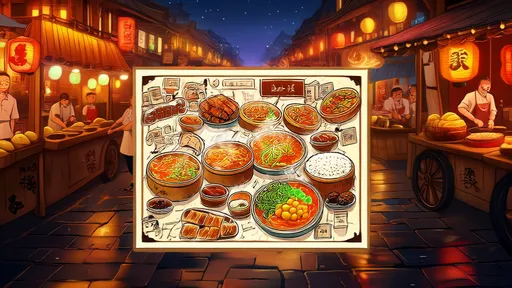
The sizzle of skewers on hot grills, the intoxicating aroma of spices dancing through humid night air, the kaleidoscope of neon signs reflecting off steaming pots - Asia's night markets offer more than just meals, they serve up cultural experiences on plastic plates. For culinary adventurers, these open-air feasts represent the beating heart of Asian street food culture, where generations-old recipes meet the improvisational energy of urban nightlife.
Across the continent, from Taipei's labyrinthine Shilin Night Market to Bangkok's legendary Yaowarat Road, night markets have evolved into sophisticated gastronomic destinations. What began as informal evening gatherings of food vendors has transformed into carefully curated food ecosystems, with some markets spanning dozens of city blocks and serving thousands of dishes. The real magic happens when visitors abandon their maps and surrender to the sensory overload - following their noses down narrow alleys where grandmothers flip oyster omelets with the precision of concert pianists and young innovators reinvent traditional snacks with molecular gastronomy twists.
The Art of Night Market Navigation
Seasoned night market explorers develop an instinct for spotting authentic gems amidst the tourist traps. In Singapore's Maxwell Food Centre, the longest queues often indicate the most legendary stalls - like the Tian Tian Chicken Rice stand that earned Michelin recognition while maintaining its humble $3 price point. Meanwhile in Hong Kong's Temple Street Night Market, the real culinary treasures hide in the "dai pai dongs" (open-air food stalls) where wok masters perform acrobatics with flaming pans of typhoon shelter crab.
Climate plays unexpected roles in these nocturnal food safaris. The monsoon rains of Kuala Lumpur's Jalan Alor transform the market experience, as plastic sheets unfurl like circus tents over sizzling satay stations, creating intimate steam-filled dining cocoons. During Seoul's freezing winters, the steam rising from odeng (fish cake) carts becomes visible storytelling - each vendor's broth recipe creating distinct vapor patterns in the cold air.
Regional Flavors Tell Cultural Stories
Every night market corridor whispers tales of migration and adaptation. Penang's Gurney Drive showcases the Peranakan culture's fusion of Chinese ingredients with Malay techniques in dishes like asam laksa - a tamarind-infused fish broth that somehow balances sweet, sour, and spicy in every spoonful. Walk through Osaka's Dotonbori and you'll taste Japan's historical openness to foreign influences in the takoyaki (octopus balls) - a street food invented in the 1930s that blends European pancake techniques with local seafood.
The beverage rituals reveal as much as the food. In Vietnam's night markets, the ca phe sua da (iced coffee with condensed milk) vendors demonstrate precise pouring techniques developed during milk shortages. Taiwan's bubble tea stands display evolutionary biology in action - the once-simple milk tea now spawning endless mutations with cheese foam, taro balls, and alcoholic versions.
When to Break the "Rules"
Conventional food safety advice dissolves in the face of certain night market phenomena. That unrefrigerated durian stall in Bangkok? The fruit's natural antibacterial properties make it safer than it appears. The mysterious meat skewers in Beijing's Wangfujing? Their unidentified origins are part of the adventure (though maybe avoid anything still moving). Night markets operate on their own culinary logic - dishes that would raise health inspectors' eyebrows in daylight become irresistible after midnight when consumed surrounded by laughing locals.
The most rewarding night market experiences often come from surrendering to vendor recommendations. When the elderly woman at Manila's Mercato Centrale insists you try her "adobo flakes" - a dehydrated, crispy version of the Philippine classic - resistance is futile. These culinary elders possess generations of knowledge about how flavors evolve between midnight and dawn, when night market dining hits its stride.
The New Night Market Economy
Modern Asian night markets have become innovation labs for aspiring restaurateurs. In Seoul's Gwangjang Market, millennials are reinventing Korean comfort food with vegan kimchi and gluten-free tteokbokki. Taipei's Ningxia Night Market now features digital payment systems at century-old stalls, while maintaining traditional "xiaochi" (small eats) portioning that encourages sampling across multiple vendors.
Sustainability movements are taking root too. Singapore's night markets now feature "ugly food" stalls selling imperfect produce at discounts, while Bangkok's JJ Green Market has become a showcase for edible insects as protein alternatives. Even the lighting is evolving - LED replacements for traditional bulbs creating surreal atmospheres where fluorescent dumplings glow like neon signs.
For travelers, night markets offer the ultimate culinary democracy. Three-Michelin-starred chefs and backpackers queue side-by-side for the same $1 bowls of tom yum goong. The shared plastic stools become great equalizers, where business deals get made over shared plates of stingray and college romances blossom over sticky mango rice. In these bustling midnight food villages, the real menu offers something far more valuable than calories - it serves up authentic human connection, one delicious bite at a time.